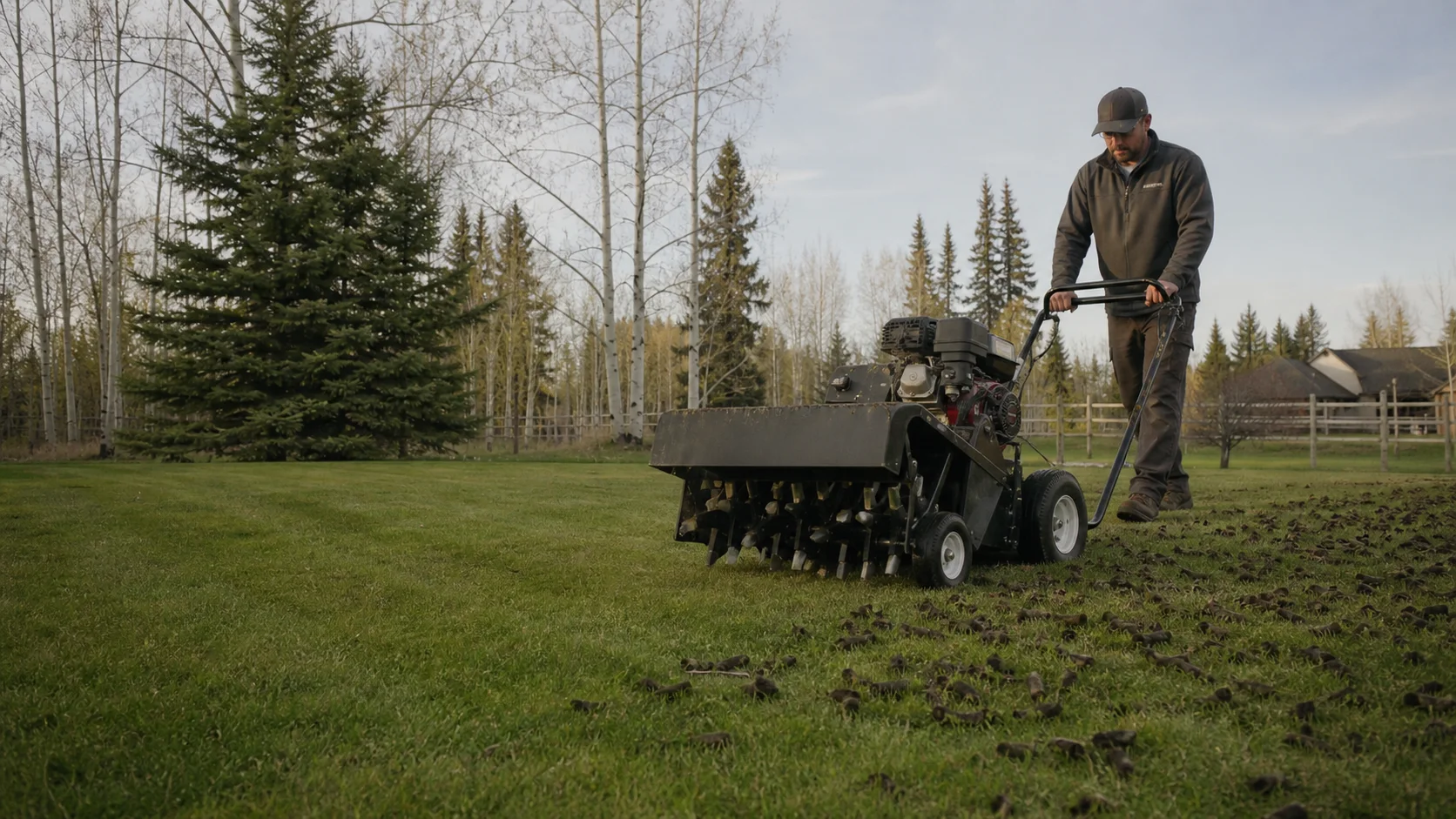
PULL THE PLUGS.LET ITBREATHE.
Thousands of cores pulled out of packed clay so water, air and fertilizer get down to the roots instead of running off the top.
Cores, not spikes: Spikes push the soil tighter. Coring takes some out.
Plugs left to break down: No cleanup for you. They're gone in a couple of weeks.
Best paired with seed: Open holes are the best seedbed a lawn will ever have.
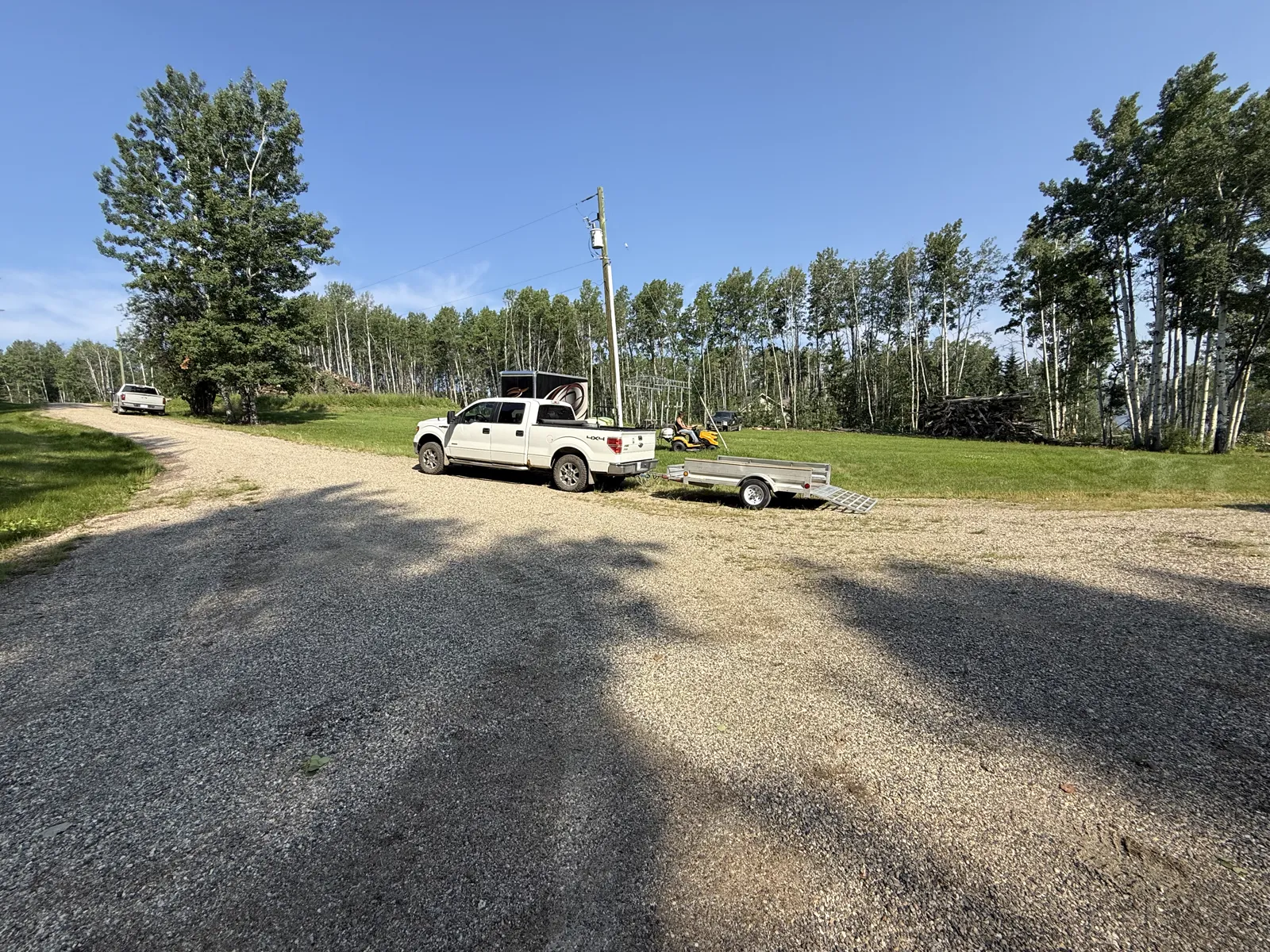
Local crew
Fort St. John & the Peace
Fully insured
On your property
Aeration service
Clay gets hard. Roots stop moving.
Most struggling lawns around here aren't sick. They're compacted.
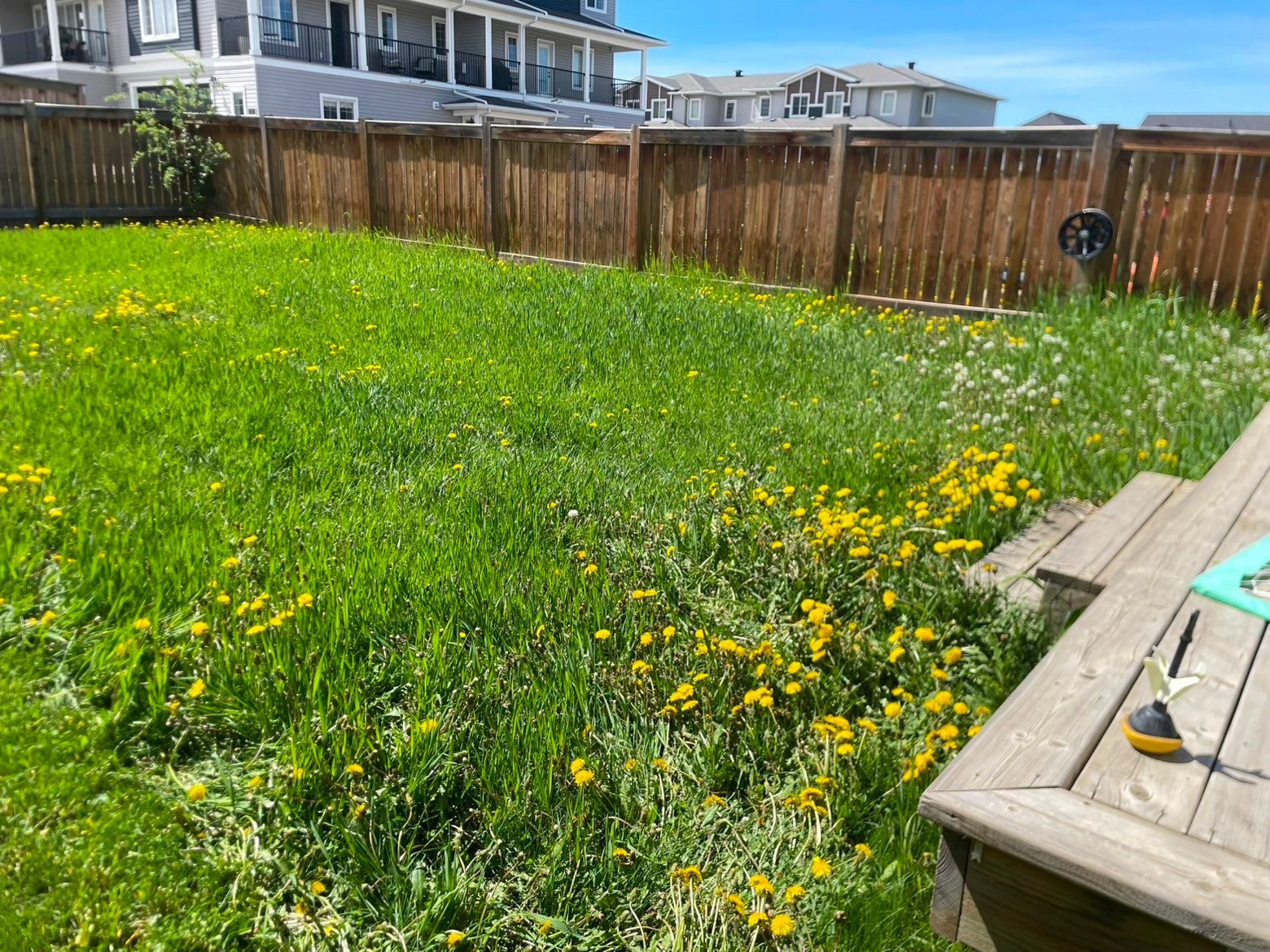
A lot of ground in and around Fort St. John is heavy clay, and clay packs. Add a few winters of frost, a summer of foot traffic and whatever machinery went across it when the house was built, and the top few inches turn into something water sits on top of rather than soaks into.
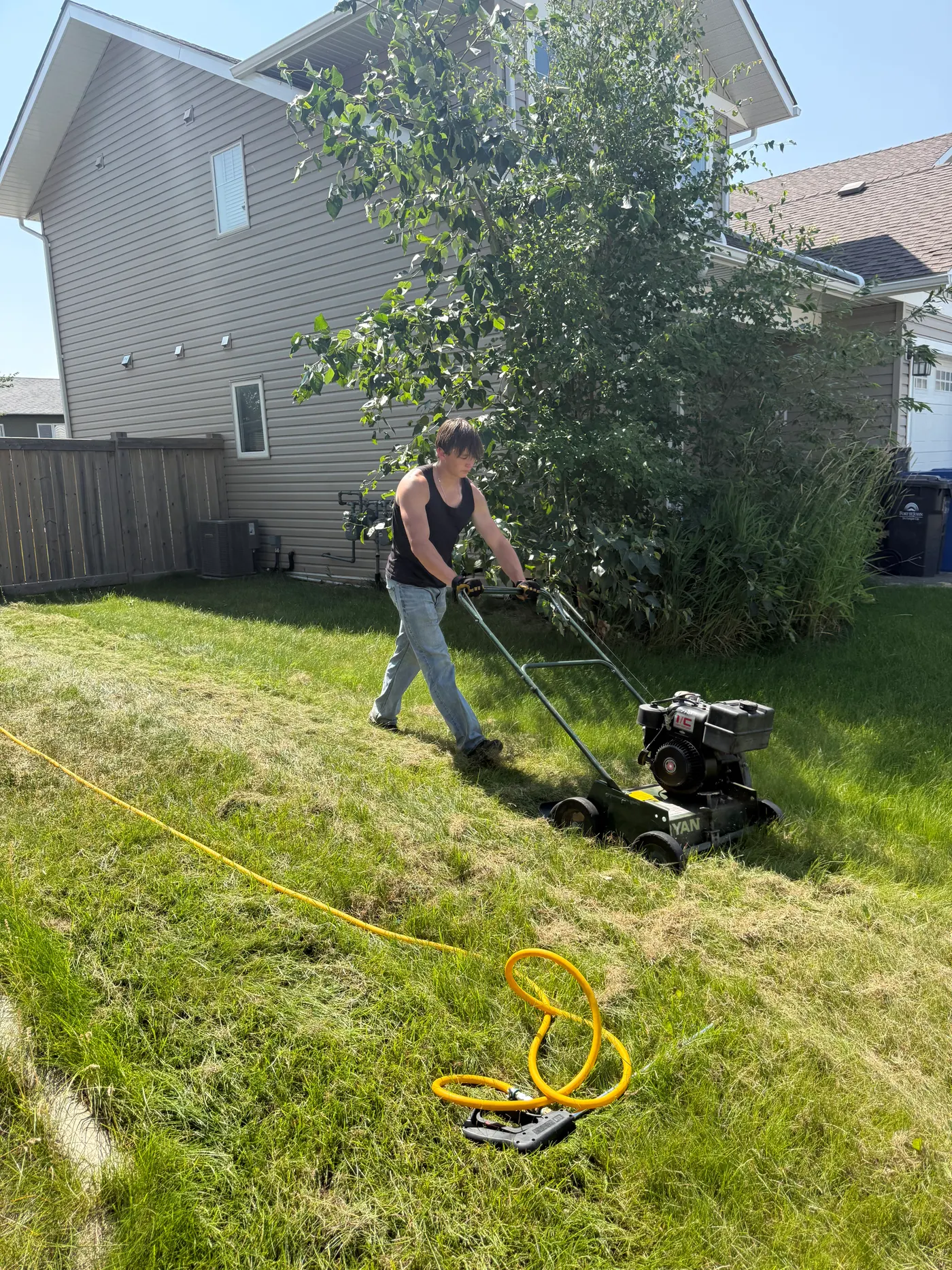
Core aeration pulls thousands of small plugs out of that layer and leaves the holes open. Water gets down instead of running to the low corner. Fertilizer reaches roots instead of sitting on the surface. Roots have somewhere to go. The plugs stay on the lawn and break down in a couple of weeks — you don't have to rake anything up.
- Core aeration, not spike aeration
- Plugs left on the lawn to break down on their own
- Best done when the grass is actively growing
- Pairs with overseeding — the holes are a ready-made seedbed
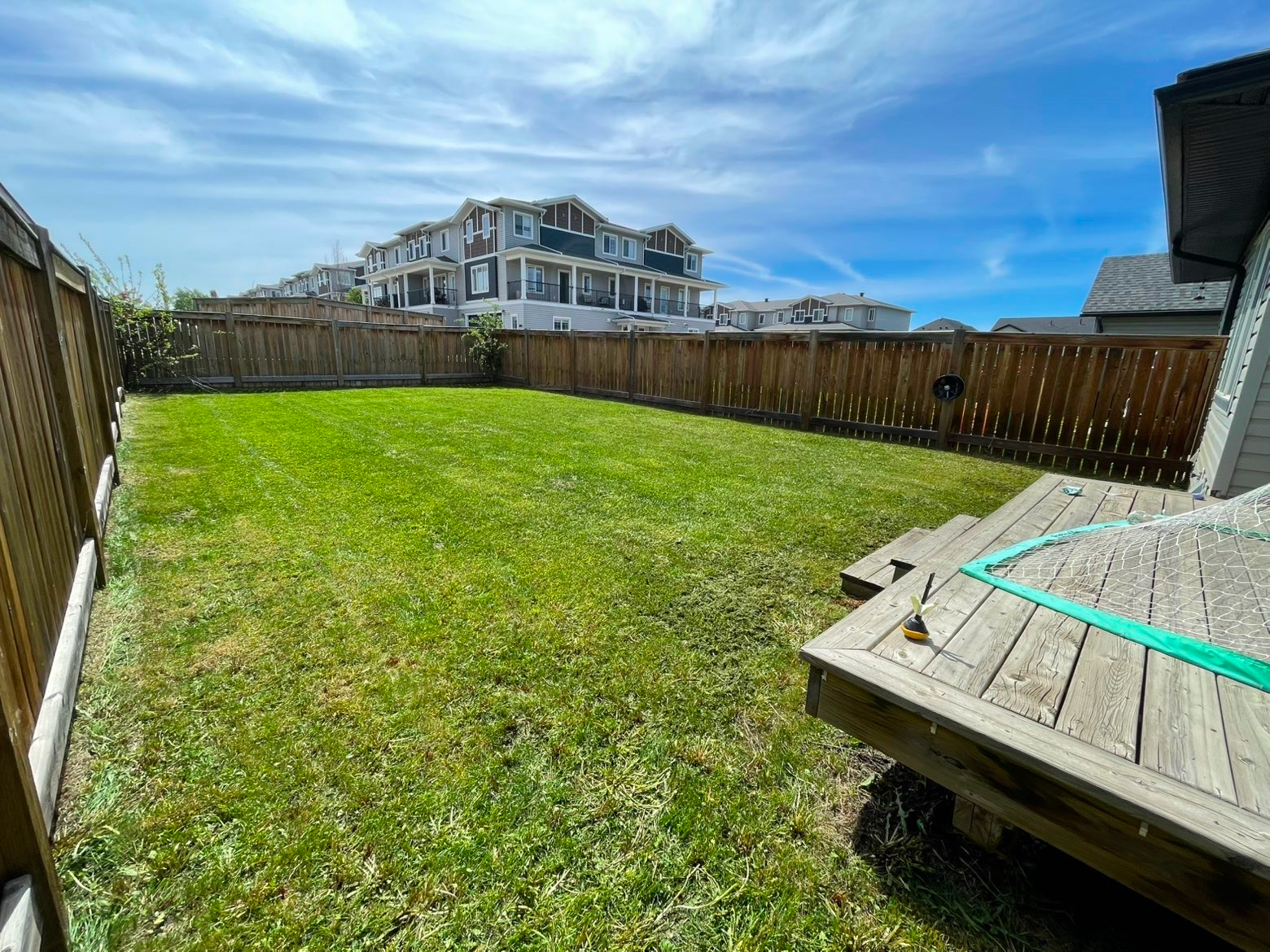
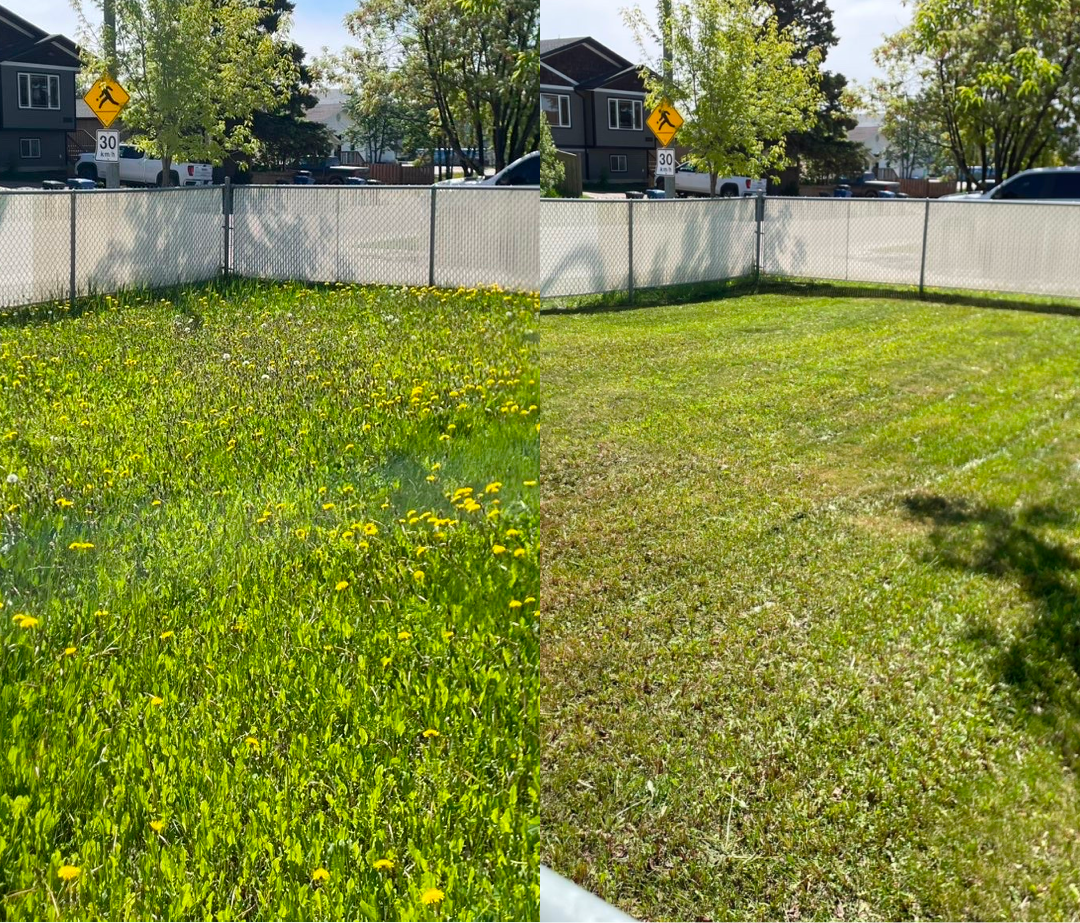
How to tell it's compacted
Four signs the ground has sealed up
Try this: push a screwdriver into the lawn. If it won't go in easily, that's your answer.
Water pools or runs off instead of soaking in
Rain that sits in a sheet on the surface, or runs straight to the low side of the yard, isn't getting to any roots on the way past.
Hard, dry ground even after rain
If it's rained and the soil an inch down is still dry and dense, the water never got through the top layer.
Thin, struggling grass in the traffic lanes
The line from the gate to the shed, the path the kids run, the strip beside the driveway — those wear out first because they're packed hardest.
Feeding it makes no difference any more
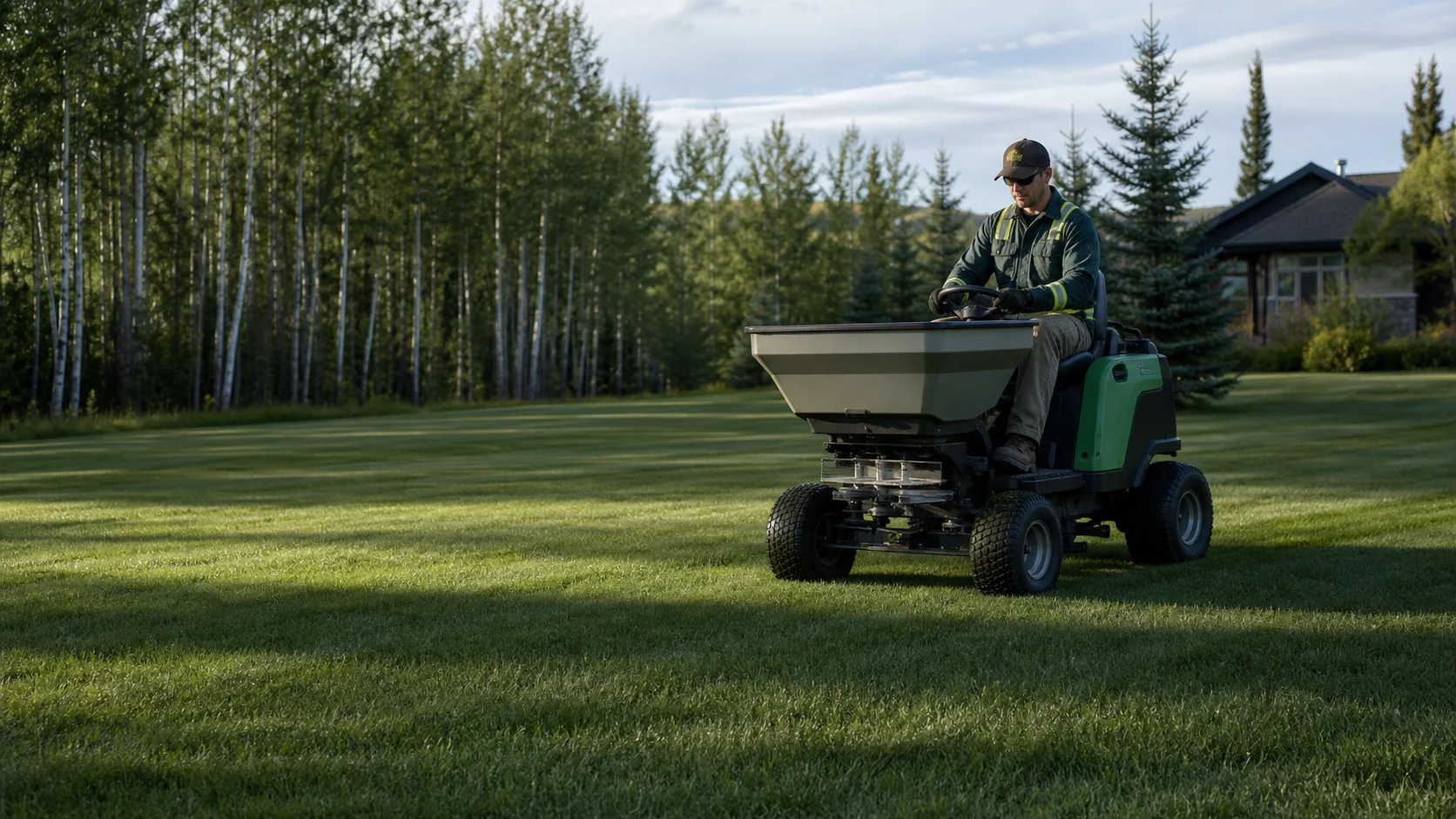
Fertilizer that doesn't seem to do anything usually isn't reaching the root zone. It's sitting on a sealed surface waiting to wash off.
How we aerate
Cores out. Not spikes in.
Coring, done at the right time
A core aerator pulls plugs of soil out and physically removes material, which is the only thing that actually relieves compaction. Spike aerators just punch holes and press the surrounding soil tighter — they look like they're doing something and they make the problem slightly worse. We core when the grass is actively growing so the lawn closes the holes back over quickly, and we go over the compacted lanes twice. The plugs stay where they fall.
Spikes and shortcuts
Core aeration
How it runs
One visit. A couple of hours.
Mark your sprinkler heads and any shallow wiring, and we'll take it from there.
Tell us roughly how big the lawn is and whether there's irrigation, invisible fencing or shallow low-voltage wiring in it.
In writing. Say whether you want overseeding with it — done together it's one visit instead of two.
Full coverage, a second pass on the packed lanes. Plugs stay on the surface.
Plugs break down inside a couple of weeks and the holes close in as the grass grows. Water it and it goes faster.
Our guarantee
Skipped a section? We come back.
If part of the lawn didn't get cored, or the coverage is obviously thin in a section, call 250-329-4635 and we'll come back over it. No charge.
- You don't pay twice for a section we missed.
- You don't need a season plan to get it.
- You don't have to be home for the return visit.
- You don't have to prove anything. Point at the spot.
FAQ
Aeration, answered
How often does a lawn need it?
Once a year is plenty for most yards on clay, and every second year is fine if the ground isn't badly packed and doesn't get much traffic. Anyone selling you aeration twice a season is selling you a visit, not a fix.
Do I have to clean up the plugs?
No. Leave them. They break down in a week or two and the soil in them goes back into the lawn, which is part of the point. Raking them off just throws away good topsoil.
Should I overseed at the same time?
If the lawn is thin at all, yes. Open cores are the best seedbed you'll ever get without tearing the lawn up — seed drops in, has soil contact and stays put. Doing them together is one visit and it's the single best thing you can do for a worn-out lawn.
Will it wreck my sprinklers?
Not if we know where they are. Mark the heads before we come, along with any invisible dog fence or shallow low-voltage wiring, and we'll work around them. We can't avoid what we can't see.
When's the right time of year?
While the grass is actively growing, so it can close the holes back over — so late spring once things have warmed, or late summer into early fall. We don't core frozen or bone-dry ground.
Open the ground back up.
One pass with a corer, and water, feed and roots all start going where they're supposed to again.
Free written quote →