FEED IT RIGHT.IT COMES INTHICK.
Granular feed spread evenly and timed to a short northern season, so the grass grows in thick enough to crowd weeds out on its own.
Timed to the season: Not the same blend in May as in September.
Spread evenly: Calibrated spreader, no stripes and no burnt patches.
Thicker turf: A dense lawn is the cheapest weed control there is.
Local crew
Fort St. John & the Peace
Fully insured
On your property
Fertilization service
Thin grass is a feeding problem.
Bare ground is where weeds start. Thick grass doesn't leave them any.
The growing window in the Peace Region is short and it works the grass hard. A lawn has to break dormancy, put on most of its growth, survive a hot dry stretch and then store enough to get through a long winter — and it does all of that between about mid-May and the end of September.
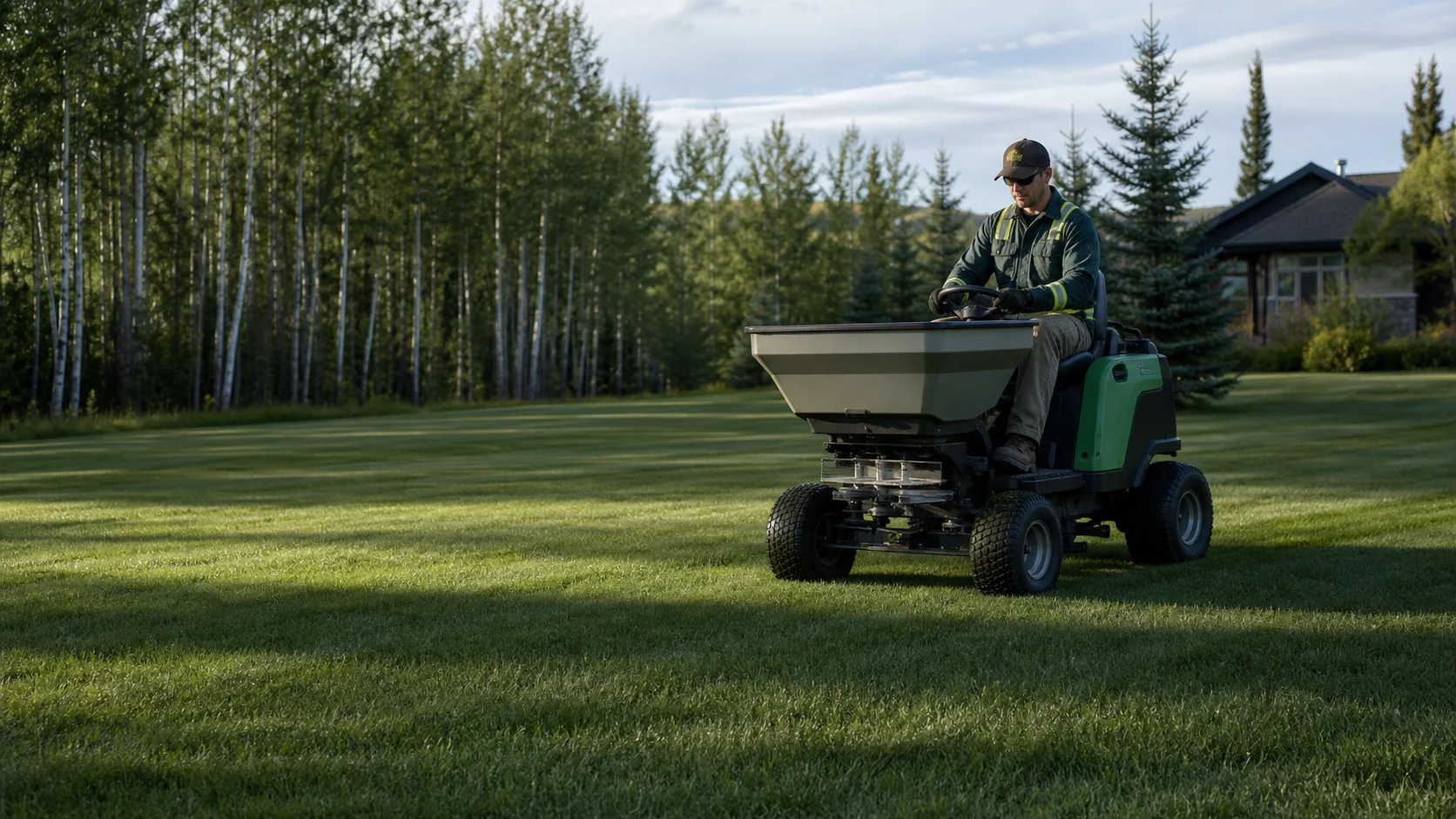
Granular feed at the right points in that window is what makes the difference between a lawn that thins out every August and one that stays dense. We spread it with a calibrated spreader so it goes down evenly, because the visible sign of a bad fertilizer job is stripes — dark green where it doubled up, pale where it missed, and burn where somebody dumped it.
- Granular, not liquid — it feeds over weeks instead of days
- Blend matched to where the season is
- Spread with a calibrated spreader, edges included
- Works best paired with aeration and overseeding
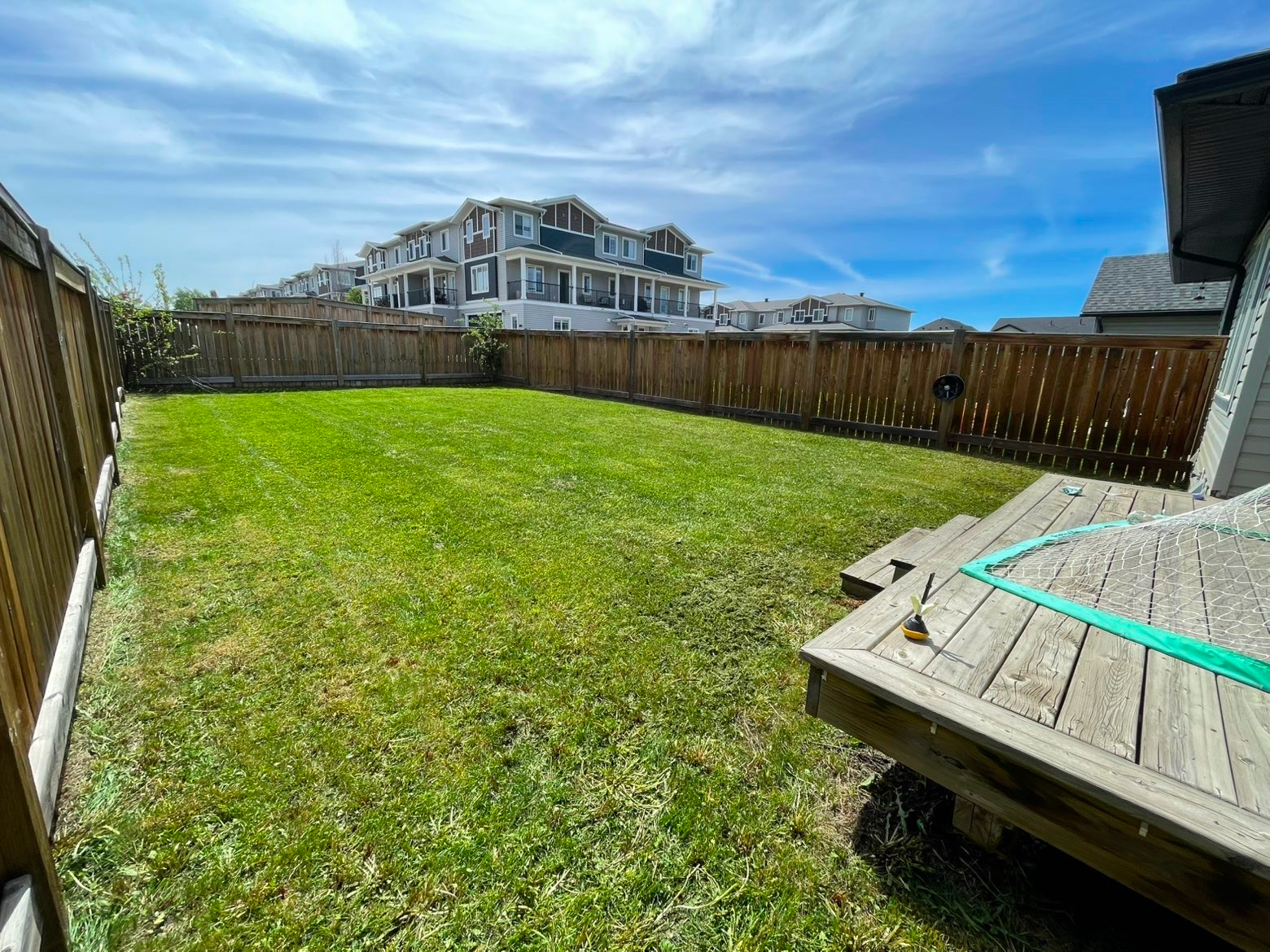
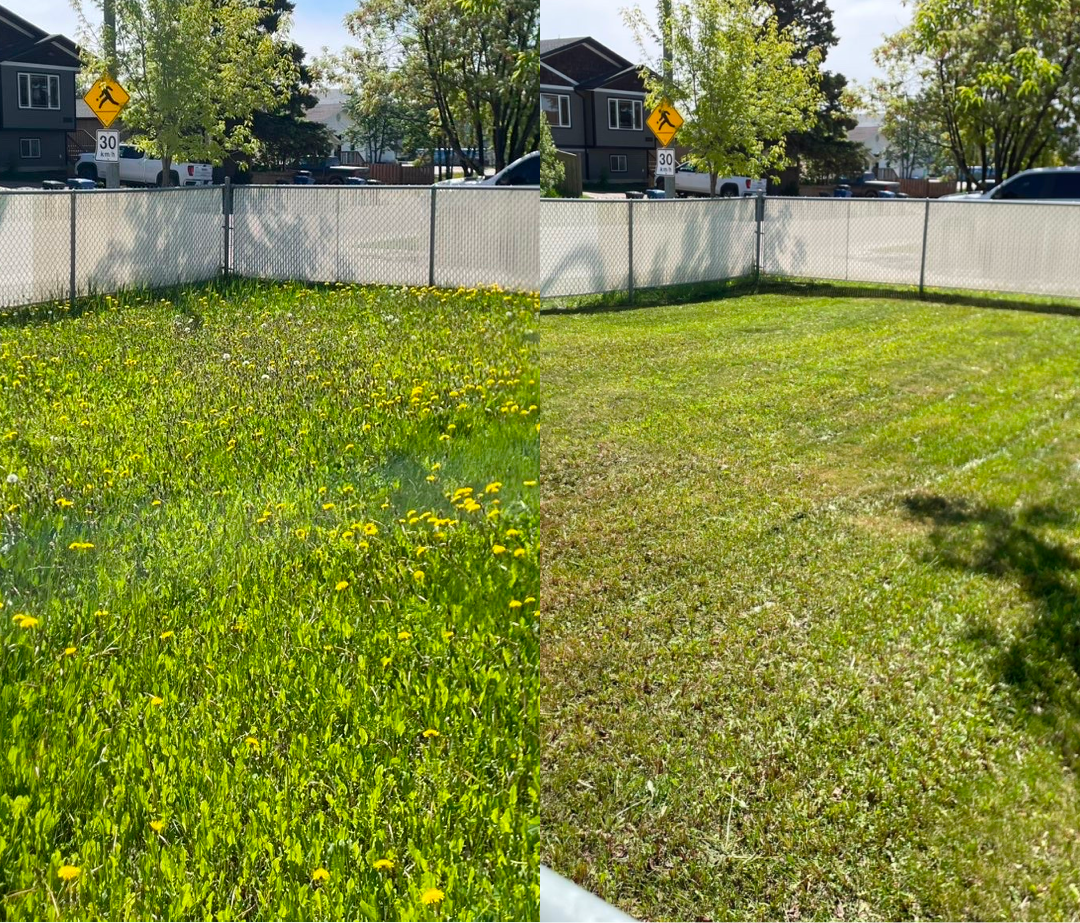
What an underfed lawn looks like
Four signs it's hungry
Water won't fix any of these. They're all the same problem underneath.
Pale, yellow-green through July
Colour is the first thing to go when nitrogen runs out. A lawn that greens up in spring and fades by mid-summer used what it had and never got any more.
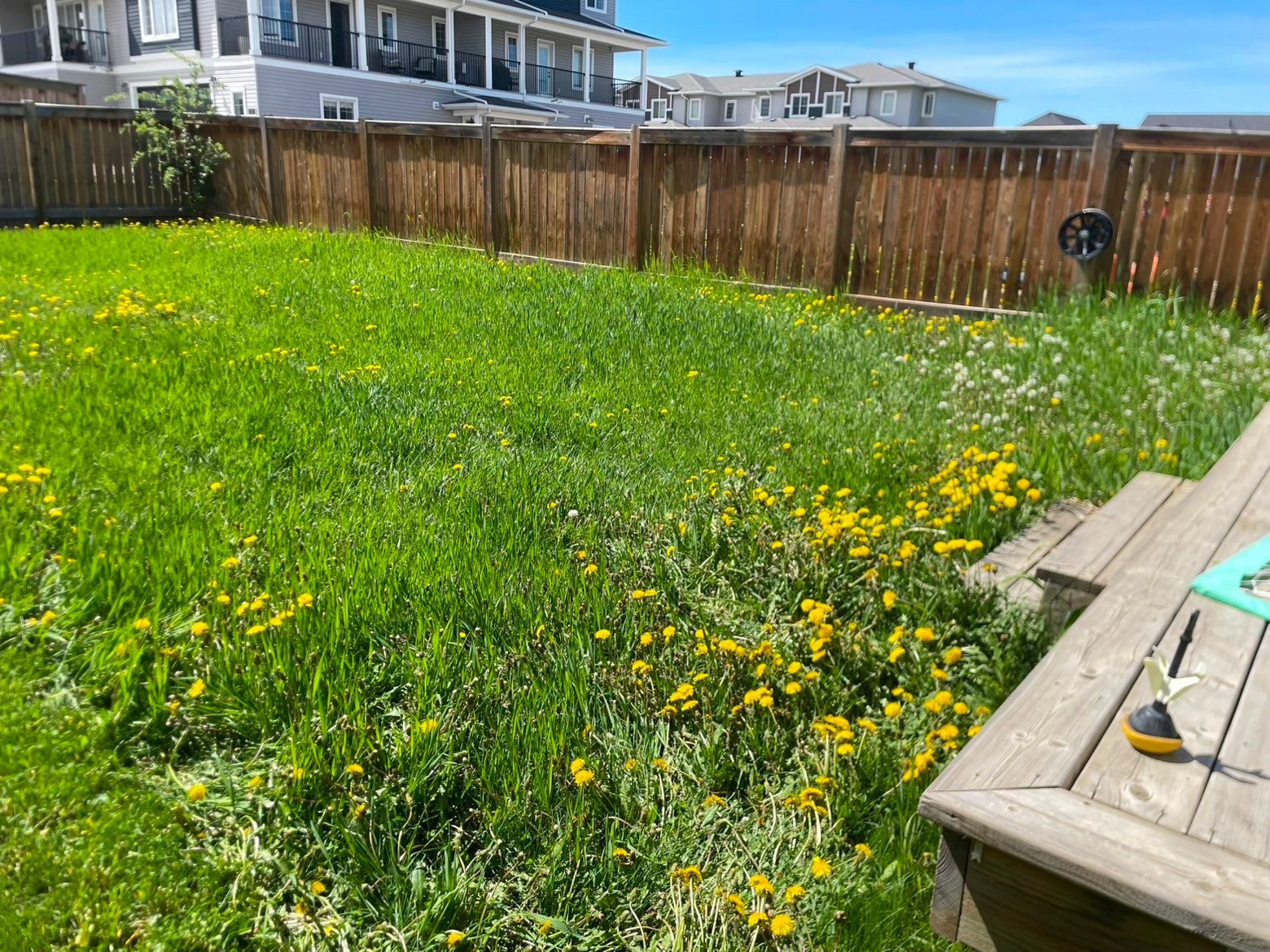
You can see soil between the blades
Healthy turf is dense enough that you can't see the ground through it. Once you can, every one of those gaps is somewhere a weed seed can land.
Weeds are winning without spreading
Dandelion and clover don't need to be aggressive to take over. They just need bare ground, and a thin lawn hands it to them.
It never recovers from anything
Dog spots, a dry week, a wheelbarrow parked on it — a fed lawn grows back over that in a couple of weeks. A starved one keeps the scar all season.
How we feed it
Even coverage beats a strong bag.
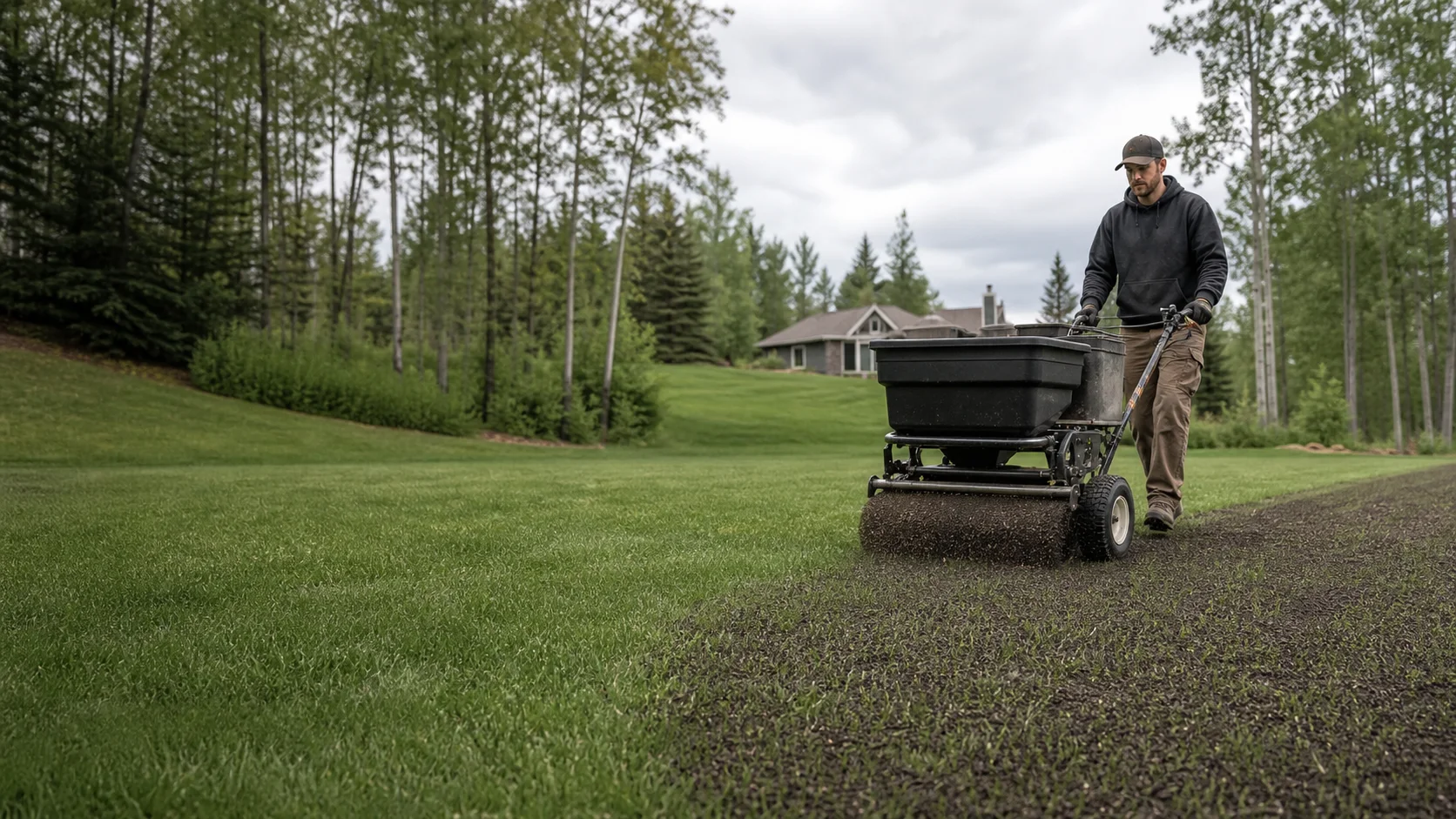
Calibrated, timed, edged
The spreader gets calibrated to the product and walked at a consistent pace on a set pattern, so the whole lawn gets the same amount — including the edges, which is where hand-spreading always falls short. Timing matters as much as the blend: feed too early and it goes into ground that's still cold and does nothing, feed too late in the fall and you push soft growth into the first freeze. We work to the season, not to a calendar date.
The bag-from-the-store way
How we do it
How it runs
You don't have to be there.
It goes down dry, and there's nothing to keep off.
Tell us the rough size and how the lawn has been doing — pale, thin, patchy, fine but you want better.
In writing, per application, with what's in each one. You choose how many you want.
Whole lawn, edges included, on a set pattern. Takes well under an hour on a town lot.
Granular feed releases slowly. You'll see colour first, then density. It isn't an overnight change and we won't pretend it is.
Our guarantee
Striped or missed? We come back.
If an application goes down uneven — stripes, a burnt patch, a strip that got skipped — call 250-329-4635 and we'll come and correct it at no charge.
- You don't pay again for a spread we got wrong.
- You don't need a season plan to get it.
- You don't have to be home for the return visit.
- You don't have to prove anything. Tell us what you're seeing.
FAQ
Fertilization, answered
How many applications does a lawn need?
Most lawns up here do well on two or three across the season, spaced out through the growing window. More than that on a short northern season is usually somebody selling rounds rather than feeding grass. We'll tell you what your lawn is asking for.
Is this the same as weed control?
No. Fertilizer feeds grass — it doesn't kill anything. It works against weeds indirectly, by growing turf thick enough that weed seed has nowhere to land. If you want weeds actively killed, that's herbicide spraying and ALC doesn't do it.
How long until I see something?
Colour usually inside a couple of weeks, density over a month or two. Granular feed releases slowly on purpose. Anything that greens a lawn up in three days is a quick hit that's gone just as fast.
Are kids and dogs okay on it?
It goes down as dry granules and there's nothing to dry off. We'd suggest watering it in and letting it settle before heavy play, mostly so it ends up in the soil rather than tracked around the house.
Can you do it with the mowing?
Yes, and that's the easiest way to run it — we're already there on a set day, so the applications land at the right points without you having to book anything.
Feed it and it fills in.
Even coverage, timed to the season, on a lawn that's had enough of thinning out every August.
Free written quote →