THIN LAWN?SEED ITTHICK.
Cold-hardy seed worked into the thin and bare spots so grass takes the ground back instead of leaving it to the weeds.
Seed for this climate: Cold-hardy mix, not whatever was on the pallet.
Best over fresh cores: Aerate first and the seed lands where it can actually grow.
Watering is on you: We'll tell you exactly what it needs. It's the whole job.
Local crew
Fort St. John & the Peace
Fully insured
On your property
Overseeding service
Every bare patch is a weed waiting.
Nothing keeps weeds out like grass that's already there.
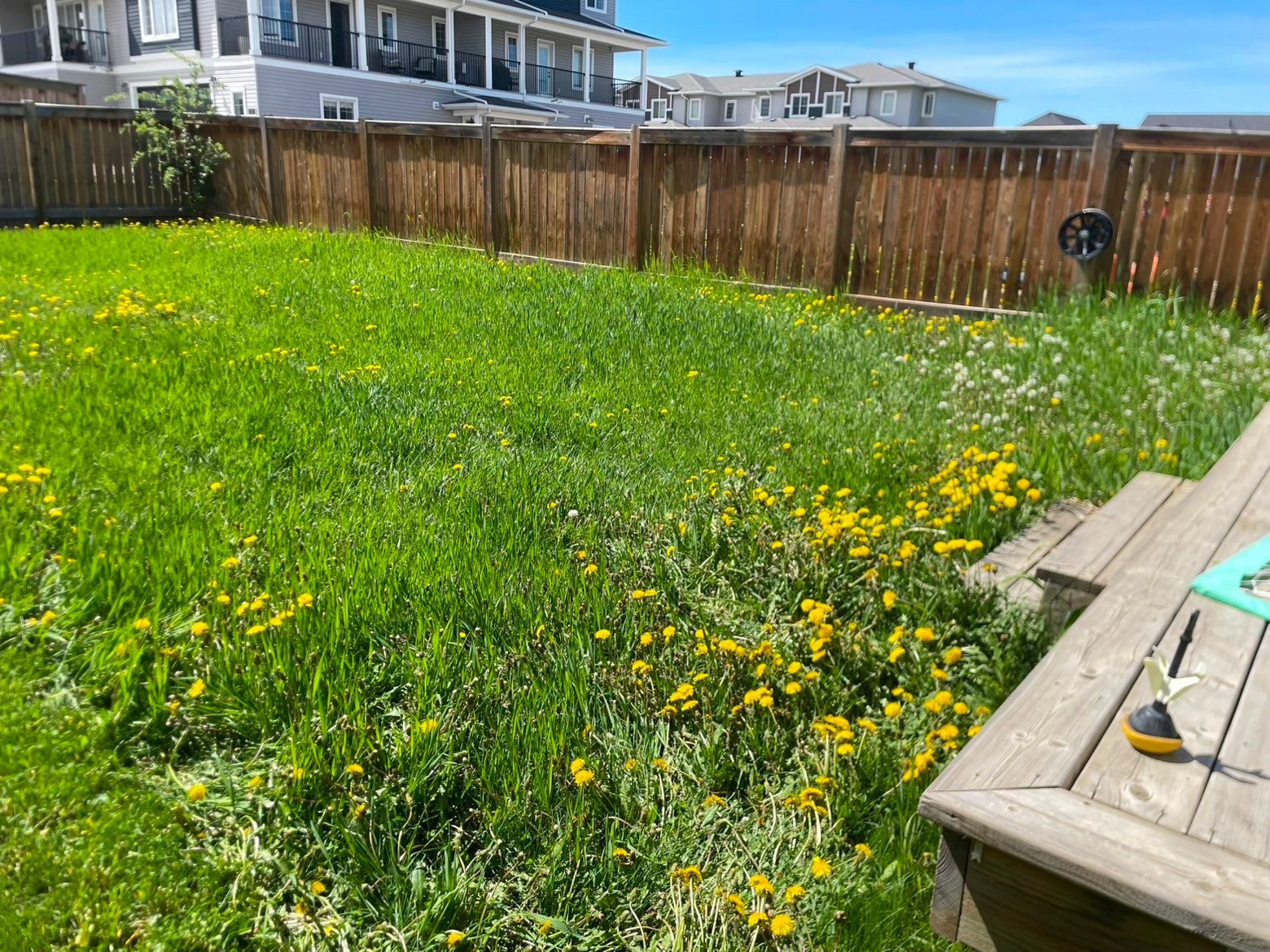
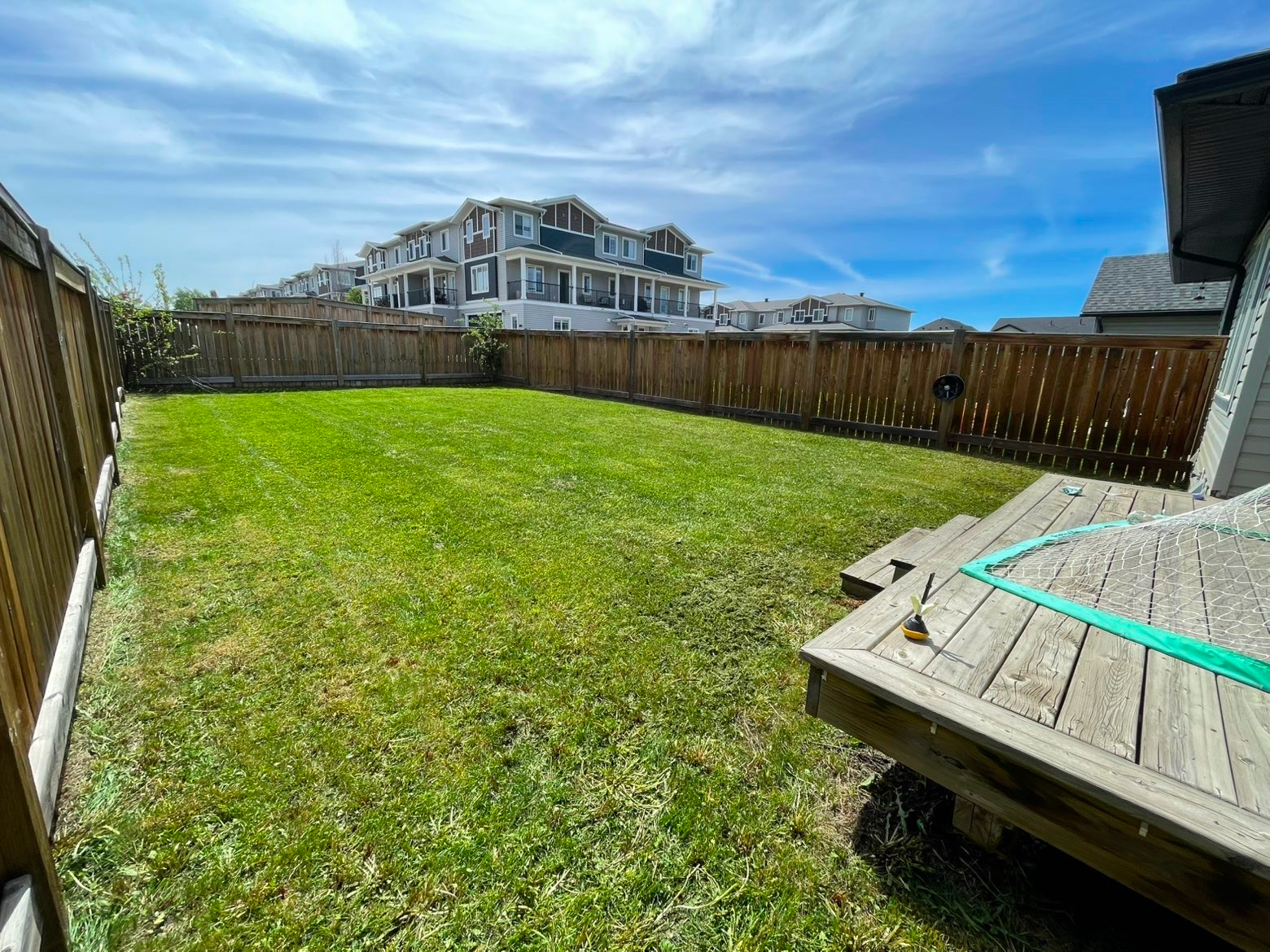
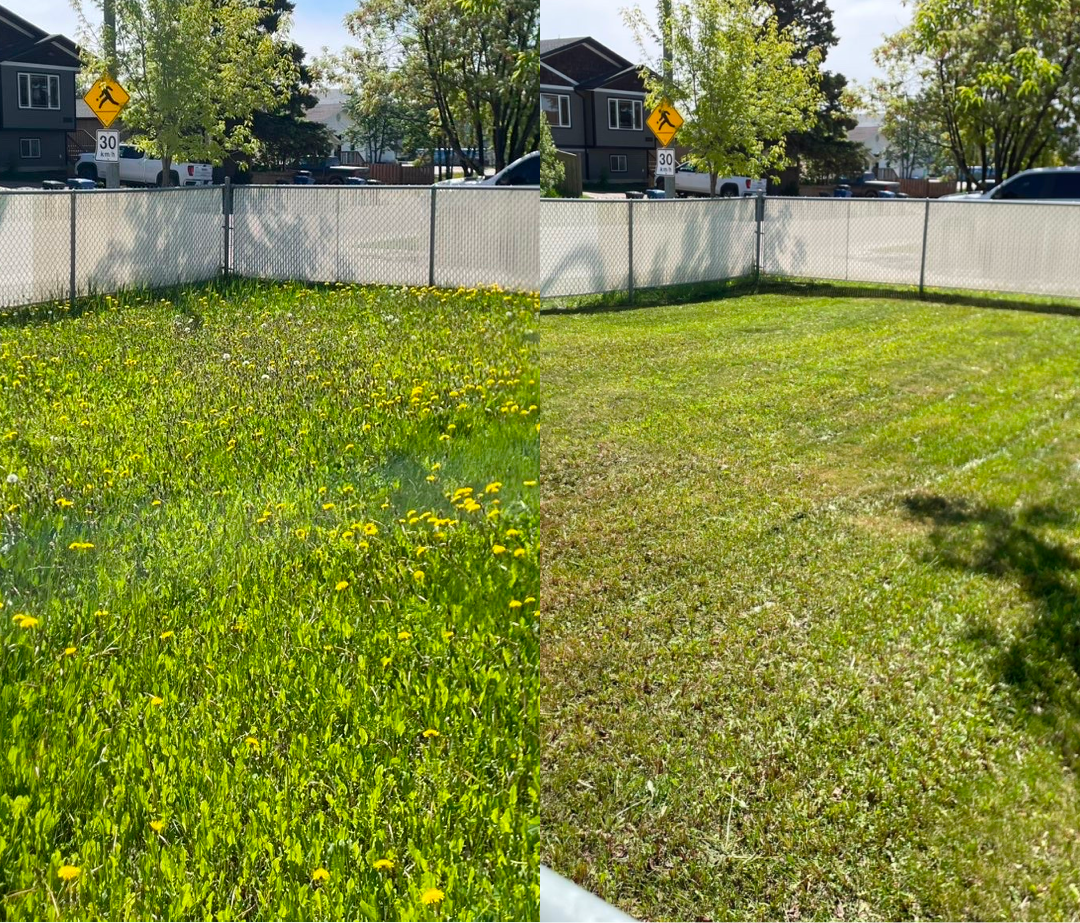
Lawns thin out. Winter takes some, dog spots take some, the strip along the driveway bakes out every July, and a shady patch under a spruce never had much to begin with. Left alone, all of that stays open ground — and open ground is exactly what dandelion and clover seed is looking for.
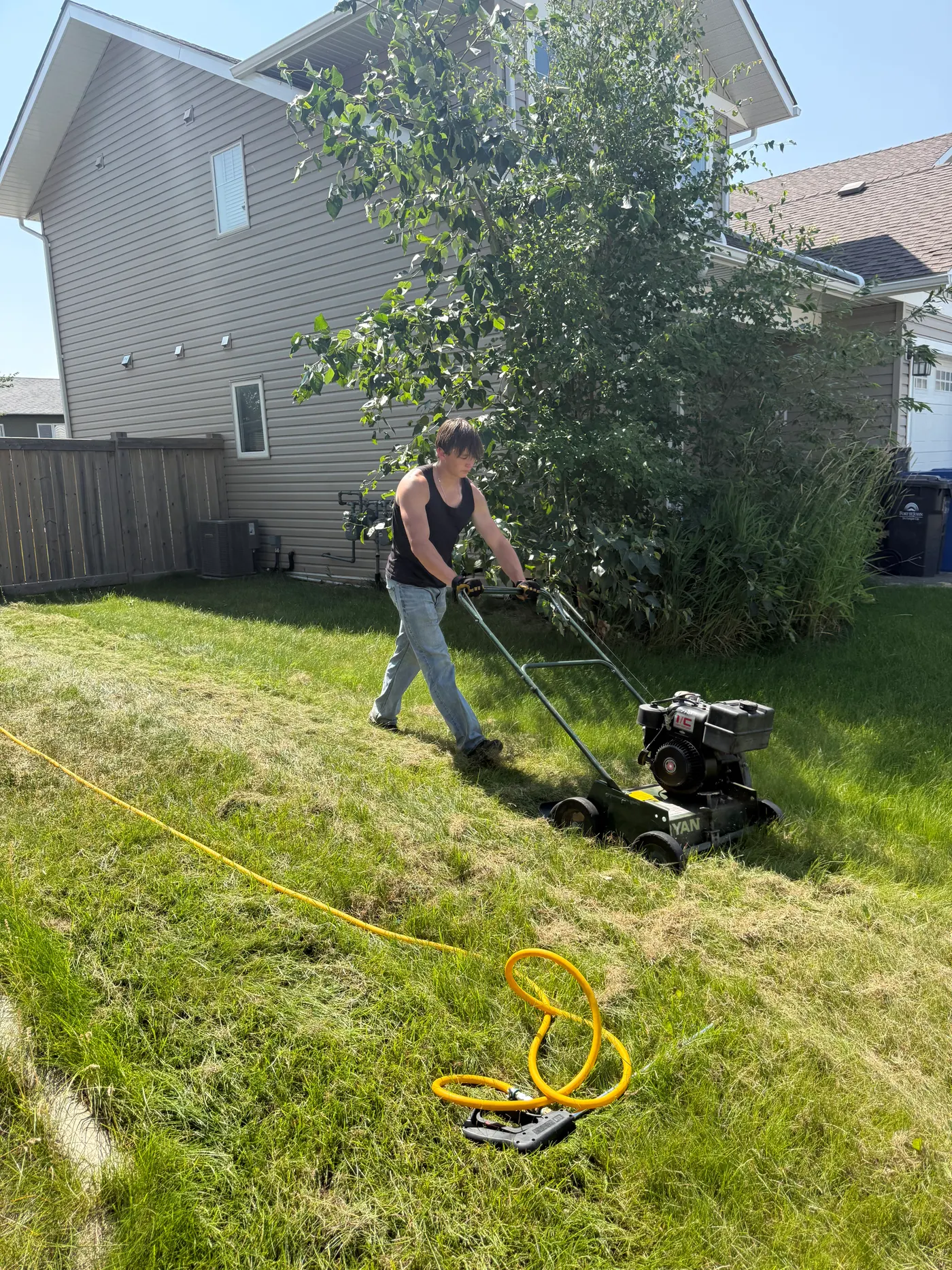
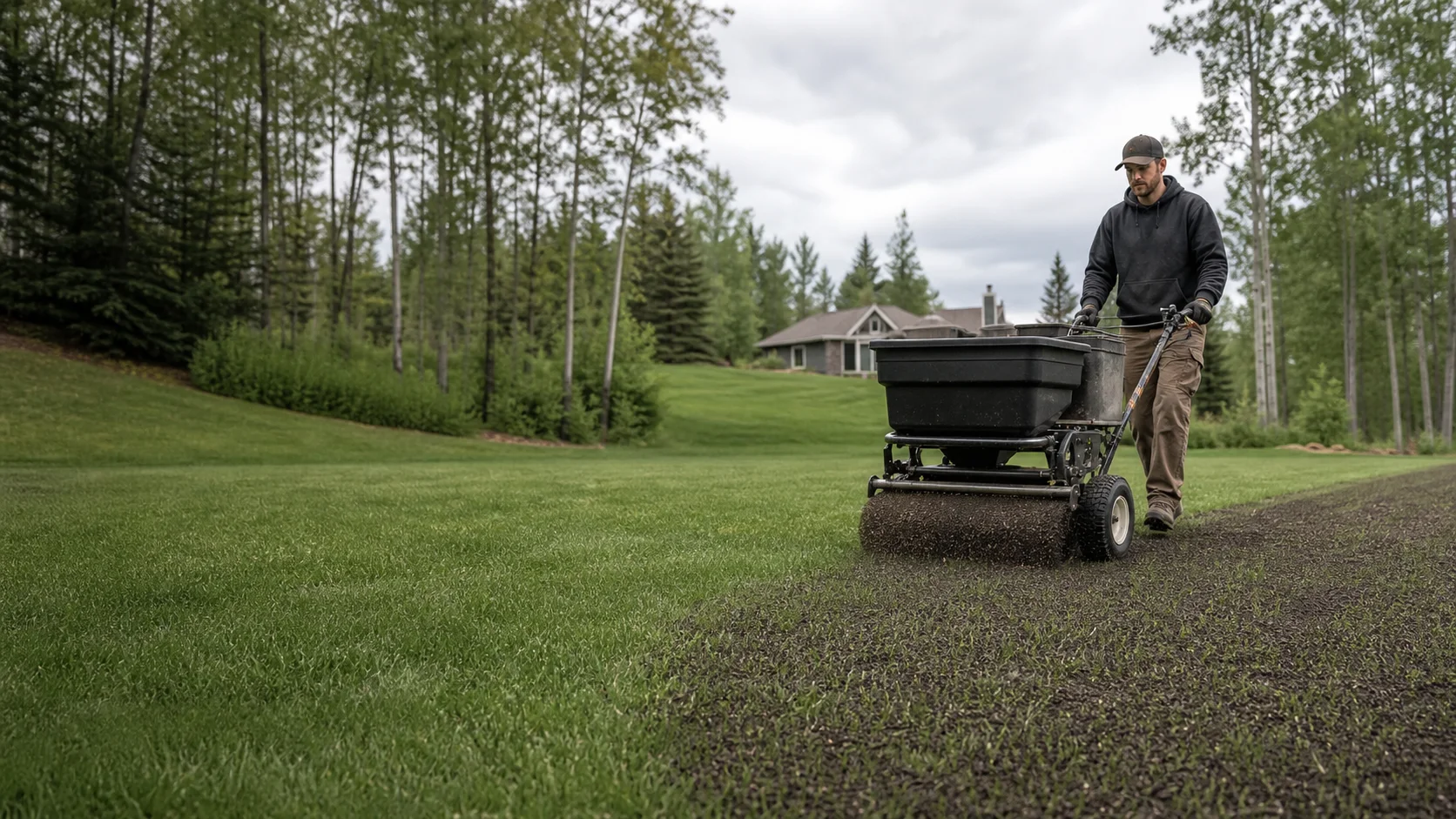
Overseeding puts new grass into those gaps. We use a cold-hardy mix suited to how long winter runs up here, spread it into the thin areas and across the whole lawn if it's generally worn, and get it in contact with soil rather than sitting on thatch. Done straight after aeration, seed drops into the open cores, which is as close to a perfect seedbed as you'll get without tearing the lawn up.
- Cold-hardy seed suited to a northern BC winter
- Spread into the thin spots or across the whole lawn
- Best done over fresh aeration cores
- You water it — we'll tell you exactly how
When a lawn needs seed
Four lawns worth seeding
Feeding a lawn that has no grass in it doesn't produce grass. It has to be planted.
You can see dirt through it
Grass that's thin enough to see soil between the blades won't thicken on feed alone. There aren't enough plants there to fill in.
Winter kill in patches
Dead areas that greened up everywhere except a few spots usually stay dead. They need new seed, not more water.
Dog spots that never come back
Urine burn kills the plant outright. The ring around it grows fine and the middle stays bare until something new is planted in it.
Weeds coming back faster every year
If more weeds turn up each season, the lawn is losing ground. Thickening the turf is the part that actually stops the cycle.
How we seed
Seed has to touch soil or it's birdseed.
Contact, timing, water
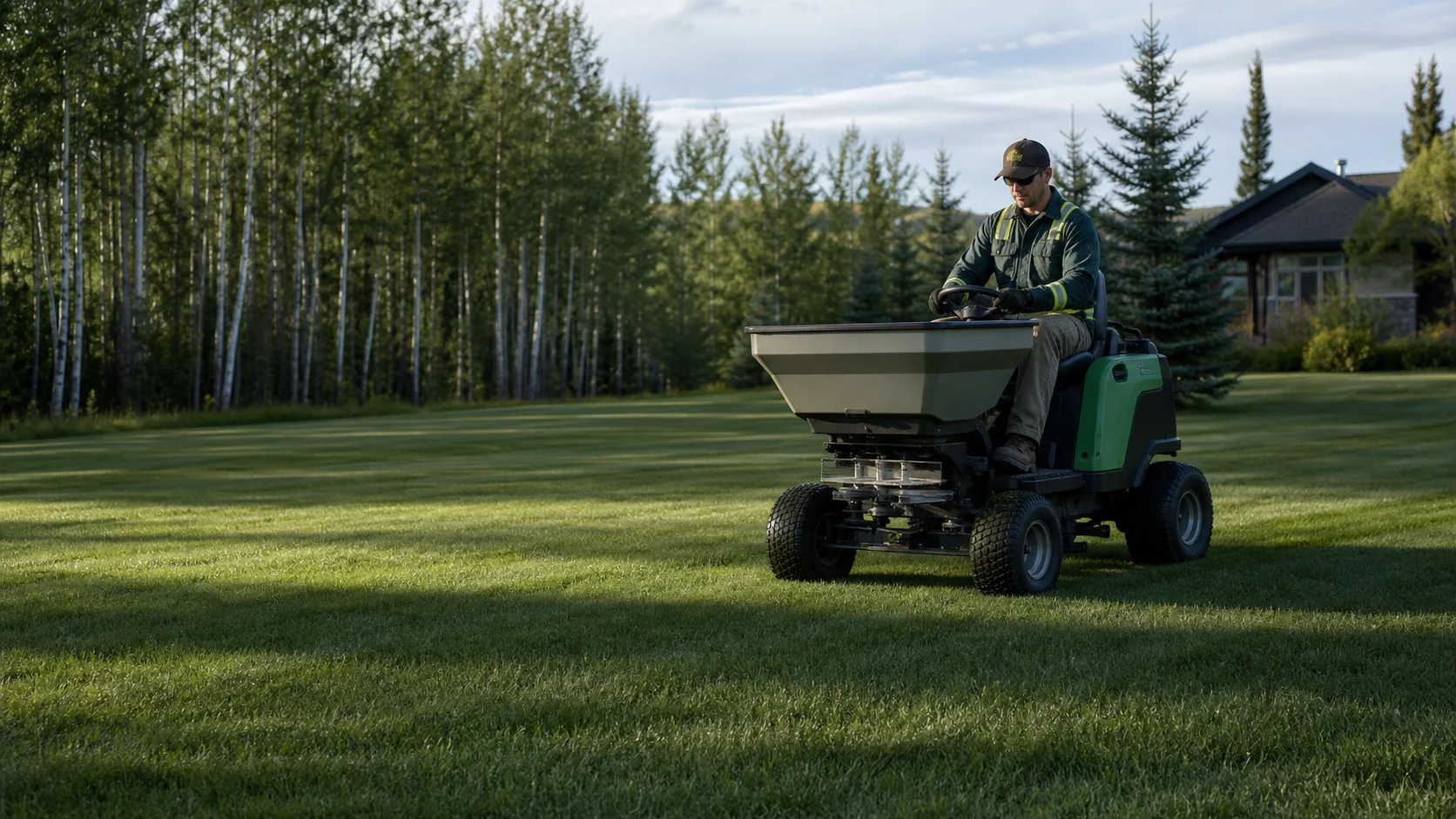
Seed scattered on top of thatch does nothing except feed the birds. It has to reach soil, stay damp and stay put. That's why overseeding straight onto fresh aeration cores works so much better than seeding a lawn on its own — thousands of open holes catch the seed and hold moisture around it. We spread evenly with a calibrated spreader, go heavier on the bare areas, and time it so the seedlings have enough season left to establish before the ground freezes.
Why it usually doesn't
How it takes
How it runs
Our hour. Then your three weeks.
This is the one job where what you do afterwards matters more than what we do.
Tell us whether it's a few patches or the whole lawn, and whether you want aeration with it.
In writing. Aeration and overseeding together is one visit and it's the pairing we'd recommend.
Even spread across the lawn, heavier where it's bare, worked into soil contact.
Light watering most days for about three weeks — not a soaking, just don't let it dry out. We'll leave you the specifics. This part is the whole job.
Straight talk, not a guarantee
We won't promise you germination.
Seed needs water it can only get from you, and weather nobody controls. So the honest version: we guarantee the spread — even coverage, right seed, right timing. If we got that wrong we come back and redo it free. What happens in the three weeks after is down to watering, and we'd rather tell you that now than take your money and blame the summer. Call 250-329-4635 either way.
- We stand behind the spread: coverage, seed choice and timing.
- We'll tell you before we start if the season is too far gone.
- We give you the watering plan in writing, not a shrug.
- If it didn't take and the watering was done, call us and we'll look at it.
FAQ
Overseeding, answered
How much do I have to water it?
Light and often for about three weeks — enough to keep the top half-inch damp, most days, rather than one heavy soak a week. New seed dies the first time it dries out. If you're away for a week during that stretch, wait and seed when you're home.
When will I see grass?
Usually seven to fourteen days for the first seedlings, and it looks patchy and unconvincing for a while after that. A seeded lawn takes a full season to look like a lawn. Anyone promising you faster is guessing.
Should I aerate at the same time?
Yes, if you can. It roughly doubles what you get for the money — the cores give the seed soil contact and hold moisture around it. Seeding onto an un-aerated, thatchy lawn is the most common reason overseeding fails.
Can I mow after?
Leave it for the first couple of weeks, then cut high and don't drag the mower around on it. Bag those first few cuts so you're not dropping clippings over new seedlings.
Is it too late in the season?
There's a point in the fall past which seed won't establish before freeze-up, and after that we'll tell you to wait for spring rather than sell you a bag of seed that has no chance. Ask and we'll tell you where the season is.
Fill the gaps before the weeds do.
Cold-hardy seed into the thin spots, ideally over fresh cores, and the lawn starts closing itself back up.
Free written quote →